

Investors
Renovate or Invest in 2026: Where Your $200,000 Works Hardest
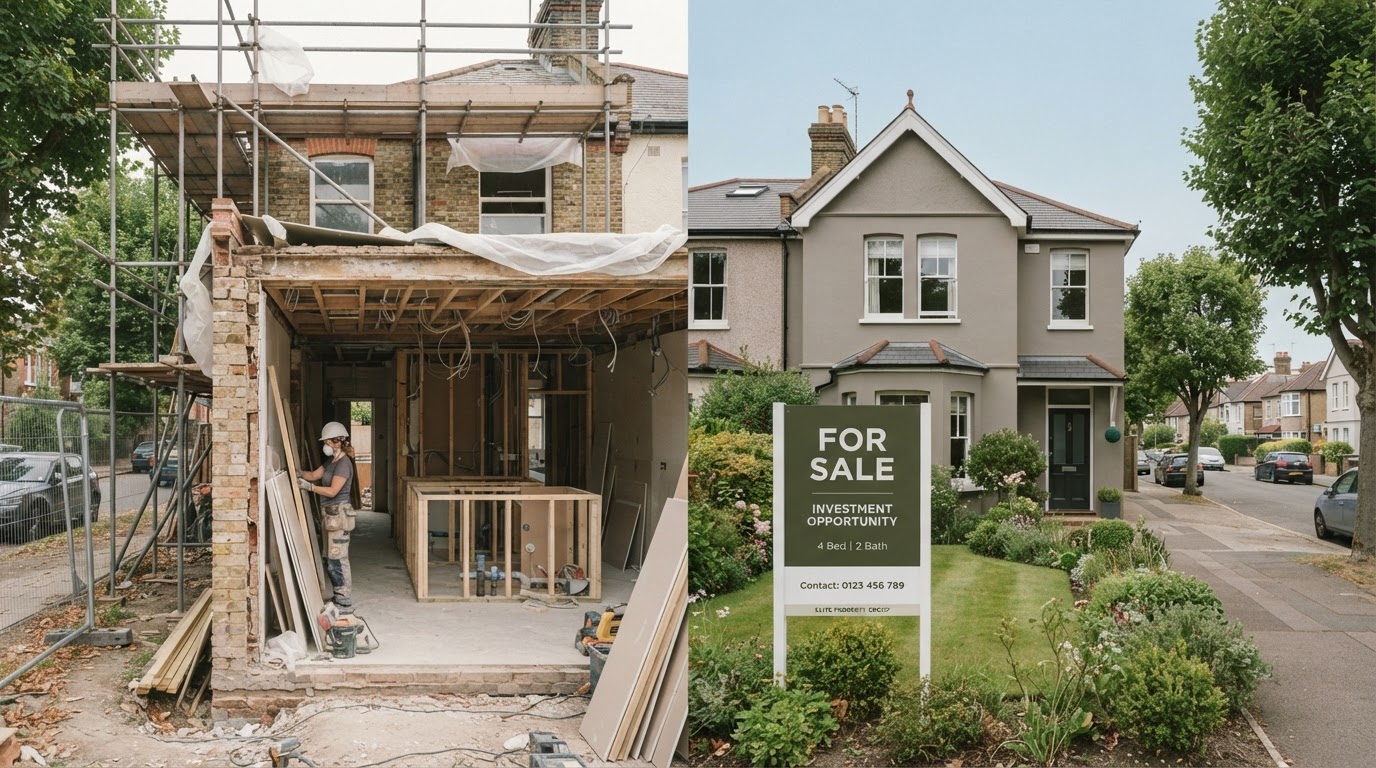
Key takeaways
- Renovating your home can add value that is generally free of capital gains tax, but it earns no income.
- An investment property can produce rent and deductions, but at current rates many run at a cash loss and the tax rules change on 1 July 2027.
- From 1 July 2027, negative gearing for residential property is limited to new builds, and the 50% CGT discount is replaced with indexation and a 30% minimum tax rate on gains.
- Home values have fallen for six straight months and Sydney values are down 7.0% over the year, while construction costs are still rising.
- Equity is only half the test — the other half is whether you can service the debt at the assessed rate.
Neither is automatically better. Renovating the home you live in can add value that is generally free of capital gains tax, but it earns no income. An investment property can produce rent and deductions, but at current interest rates many run at a cash loss, and the tax rules for investors change on 1 July 2027. The backdrop has shifted on both sides of the ledger. National home values fell 1.1 per cent in September, the sixth straight monthly fall, building costs are still rising, and the cash rate is 4.60 per cent. The answer depends on your borrowing capacity, your suburb, your tax position and how long you plan to hold.
Renovating versus investing at a glance
| Consideration | Renovating your home | Buying an investment property |
|---|---|---|
| Lifestyle benefit | Direct and immediate | Usually none |
| Income | Generally none | Rental income |
| Capital gains tax | Main residence exemption generally applies if the home has not been used to earn income | Applies. Gains accruing after 1 July 2027 are indexed and taxed at a minimum of 30 per cent |
| Deductions | Personal expenses cannot be claimed | Interest, rates and repairs can be claimed, and capital works over several years |
| Negative gearing | Not applicable | Limited to new builds from 1 July 2027, with properties held on 12 May 2026 exempt |
| Main financial risk | Overcapitalising in a falling market | Cash shortfalls, vacancies and market movements |
For many Australian homeowners, the question is no longer whether to renovate or move. It is whether putting more money into the family home makes better financial sense than buying a second property.
Should you spend $200,000 on the kitchen, bathrooms and living areas? Would the same money do more as a deposit on an investment property? Or is there a way to do some of both? In 2026 the honest answer has changed, because the market, the cost of building and the tax treatment of investment property have all moved in the past twelve months.
Could renovating your family home be the better investment?
It can be, when the value added clearly exceeds the cost and you plan to stay. Take a home worth $2 million with $200,000 spent on improvements. If it is then valued at $2.3 million, the work has created $100,000 of equity beyond its cost, before finance charges. Spend $300,000 for a $150,000 lift in value and you have a nicer home but not a successful investment.
That second outcome is easier to fall into this year. Construction costs rose 1 per cent in the June quarter and 2.8 per cent over the year according to Cotality's Cordell index, and Master Builders Australia says building materials are 38.2 per cent more expensive than in 2019. At the same time, values are falling. Cotality reports upper quartile house values in Sydney are 10.7 per cent below their peak, and Brisbane recorded the sharpest capital city fall in September at 1.5 per cent.
Rising costs against softer values is the recipe for overcapitalising. A renovation should be tested against what comparable renovated homes in your street actually sell for now, not what they sold for a year ago.
What are the tax differences between renovating and investing?
They are substantial, and they pull in opposite directions. Your home is generally exempt from capital gains tax if you are an Australian resident, it has been your home for the whole time you have owned it, it has not been used to earn income and the land is 2 hectares or less. Value you add through a renovation generally shares that exemption.
An investment property is taxed on its gain, but its running costs can be deductible. The Australian Taxation Office says interest on loans, council rates and repairs and maintenance can be claimed in the year they are incurred, while capital works and depreciating assets are claimed over several years. Personal expenses cannot be claimed, which is why interest on money borrowed to renovate a home you live in is generally a private cost.
How Will the 2027 Tax Changes Affect Property Investment?
They reduce the tax advantages of buying an established investment property from here, and they leave the family home alone. The reforms announced in the May 2026 Budget are now law. From 1 July 2027:
Negative gearing for residential property investments is limited to new builds
For established properties bought after the Budget, rental losses can only be offset against other residential property income, not wages, with unused losses carried forward
The 50 per cent capital gains tax discount is replaced with cost base indexation and a 30 per cent minimum tax rate, applying only to gains that accrue after 1 July 2027
Properties held at 7:30pm on 12 May 2026 are exempt from the negative gearing changes
Your own home remains fully exempt from capital gains tax. For anyone weighing a renovation against a new purchase today, that widens the tax gap between the two. It also makes the type of investment property matter more, because new builds keep the existing negative gearing treatment. These rules are detailed and further legislation has been flagged, so speak to your accountant before you commit.
Is buying an investment property still worthwhile in 2026?
It can be for the right investor, but the numbers need to stand up without relying on tax or assumed growth. Take a $1 million property renting for $750 a week. That is $39,000 a year, a gross yield of 3.9 per cent. Borrow $800,000 at an example rate of 6.50 per cent and the interest alone is about $52,000 a year.
That leaves a shortfall of about $13,000 before insurance, council rates, maintenance and management fees. For an established property bought today, that loss will no longer reduce tax on your salary from 1 July 2027. Capital growth may make up the difference over time, but it is never guaranteed.
Investors are already more cautious. New investor loans fell 8.6 per cent in the June quarter, the largest quarterly fall since 2022, with New South Wales down 15.5 per cent and Queensland down 10.1 per cent. Less competition can mean better buying. It does not change the cash flow.
Can you use your home equity to renovate or invest?
Often yes, but equity is only half the test. The other half is whether you can service the debt. Consider a home worth $2 million with $700,000 owing. At an illustrative 80 per cent loan to value ratio, the property could secure total borrowing of $1.6 million, which suggests up to $900,000 of accessible equity. You can read more about how lenders assess this in our guide to borrowing capacity.
Whether a lender will advance it is a separate question. Banks must assess repayments at 3 percentage points above the loan rate, and since February 2026 they can write no more than 20 per cent of new lending at debt of six times income or more. At $1.6 million of total debt, a household needs income of about $267,000 to stay under six times. Using the family home as security for investment borrowing also raises the stakes if things do not go to plan.
What should homeowners do before deciding?
Get a current valuation. Values have moved in the past six months, so base your equity and renovation numbers on today's market.
Price the renovation properly. Get fixed quotes and allow a contingency, because building costs are still rising. A construction loan can help structure the funding.
Test the investment on cash flow. Work out rent less interest and holding costs at a realistic rate before counting on growth.
Take tax guidance early. The 2027 changes treat established properties, new builds and your own home differently.
Check your borrowing capacity, not only your equity. Lenders assess income, expenses and total debt against the buffer and the six times income limit.
Plan the loan structure before you sign anything. Decide which borrowing is private and which is for investment, and keep them separate from the start. If you already own property, a refinance can release equity for either path.
If you are self employed, see our guide to self employed home loans. If you are weighing up fixed versus variable, read Fix, Float or Split. And if you are buying a home, get preapproval before you start.
Why does loan structure matter as much as the property?
Whichever way you go, how the finance is set up will shape your cash flow, your flexibility and your next move. Keeping borrowing for a private renovation separate from borrowing for investment makes record keeping simpler and keeps the purpose of each loan clear for your accountant. Mixing the two in one loan is far harder to untangle later.
Lenders also differ in how they treat equity release, construction lending, rental income and investment borrowing. Brokers must act in your best interests, and Moneysmart suggests asking which lenders a broker can access and why a recommended loan suits you. With more than 70 years of combined lending experience, the Olive Road Financial team looks at the whole position instead of a single transaction.
The Olive Road Financial view
At Olive Road Financial, we think this decision should start with a clear picture of your financial position, not with a property listing or a builder's quote. Our approach rests on three pillars: service, expertise and opportunities. Sometimes the numbers favour improving what you own. Sometimes they favour buying. Sometimes a smaller renovation and a carefully chosen investment can sit side by side. The right lender and the right loan structure are what make any of those workable.
Building wealth is not simply about owning more property. It is about making informed decisions with the assets and opportunities you already have. If you are weighing up your next move, talk to our team.
About Olive Road Financial
Olive Road Financial is a specialist mortgage broking and finance practice based in Sydney and Brisbane, arranging residential, investment and commercial lending, asset finance and private lending. The team brings more than 70 years of combined corporate and private banking lending experience, and works alongside a trusted network of accountants, solicitors, conveyancers, wealth advisers and property specialists.
Important information
This article is general information only and does not take into account your objectives, financial situation or needs. It is not credit, financial, taxation or investment guidance, and Olive Road Financial does not provide tax guidance. Tax law is complex and changing, so speak to a registered tax adviser about your circumstances. Examples are illustrative, use an example interest rate and exclude fees and charges. Property values and investment returns are not guaranteed. All lending is subject to the lender's credit criteria. Sources accessed 9 October 2026.
Frequently asked questions
Sources
- Reserve Bank of Australia (29 September 2026). "Statement by the Monetary Policy Board: Monetary Policy Decision." RBA media release.
- Lawless, T. (1 October 2026). "Australian housing values down for sixth straight month in September." Property Update (Cotality Home Value Index report).
- Cotality (10 September 2026). "High-end homes lead market downturn as affordable properties prove resilient." Cotality Monthly Housing Chart Pack, September 2026.
- AAP and Commonwealth Bank of Australia (22 July 2026). "Home-building costs rise, but not as much as feared." CommBank Newsroom (reporting Cotality's Cordell Construction Cost Index and Master Builders Australia).
- Australian Taxation Office (last updated 22 June 2026). "Eligibility for main residence exemption." ATO.
- Australian Taxation Office (accessed October 2026). "Rental expenses to claim." ATO.
- Australian Taxation Office (last updated 29 June 2026). "Tax reform: boosting home ownership, reforming negative gearing and capital gains tax." ATO new legislation.
- ABC News (13 May 2026). "Here's how federal budget negative gearing and capital gains tax changes will affect you." ABC News.
- Australian Bureau of Statistics (14 August 2026). "New home loans fall 5.4 per cent in June quarter." ABS media release, Lending Indicators, June Quarter 2026.
- Australian Prudential Regulation Authority (27 November 2025). "APRA to limit high debt-to-income home loans to constrain riskier lending." APRA media release.
- Australian Prudential Regulation Authority (28 May 2026). "APRA maintains current macroprudential policy settings in highly uncertain environment." APRA media release.
- Australian Securities and Investments Commission (24 June 2020). "RG 273 Mortgage brokers: Best interests duty." ASIC regulatory guide.
- ASIC Moneysmart (last updated 4 September 2026). "Using a mortgage broker." Moneysmart.gov.au.
- Mortgage & Finance Association of Australia (2026). "Find a Broker: Grant Whinnett, Olive Road Financial." MFAA Find a Broker directory.
If you're considering refinancing, buying a home or reviewing your investment lending, Olive Road Financial can help you understand your lending options and determine what may be suitable for your circumstances.
Get in touch with our team